

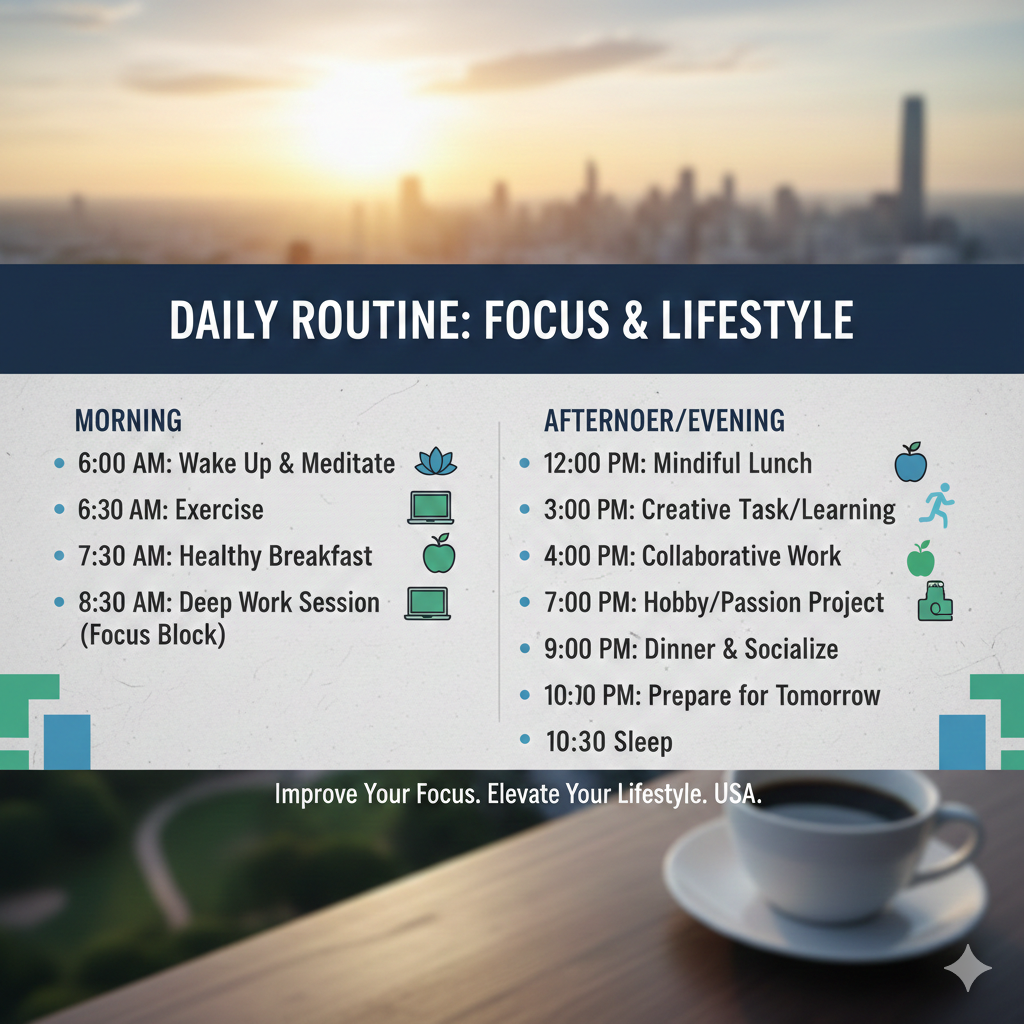
🌟 Introduction: Why a Daily Routine Is No Longer Optional in the USA
In today’s fast-moving American society 🇺🇸, people are more connected than ever before—but also more distracted, stressed, and mentally exhausted. From smartphones 📱 to laptops 💻, from long work hours 💼 to constant notifications, the modern lifestyle in the United States has made focus and balance extremely difficult.
Many Americans experience:
- Difficulty concentrating for long periods 🧠
- Constant mental fatigue and burnout 😵
- Poor sleep schedules 😴
- Irregular eating habits 🍔
- No clear separation between work and personal life ⚖️
The biggest myth is that people lack motivation.
In reality, motivation is temporary.
What actually creates long-term success is a daily routine schedule ⏰.
A daily routine is not about becoming rigid or boring. Instead, it helps you:
- Organize your time effectively
- Reduce mental overload
- Improve focus and productivity
- Build healthy habits naturally
- Create a balanced and fulfilling lifestyle
This guide is designed specifically for people living in the United States, keeping in mind American work culture, commuting habits, digital overload, and lifestyle challenges.
🧠 What Exactly Is a Daily Routine?
A daily routine is a consistent structure of habits and activities that you repeat every day at roughly the same time. It includes:
- Wake-up time ⏰
- Morning habits 🌅
- Work or study blocks 💼📚
- Meals 🍽️
- Physical activity 🏃♂️
- Relaxation time 😌
- Sleep schedule 🛌
A good routine is flexible but disciplined.
It supports your life instead of controlling it.
🔬 The Science Behind Daily Routines & Focus
Your brain has limited energy. Every decision you make—what to eat, when to work, when to rest—consumes mental power 🧠⚡.
When you don’t have a routine:
- You make hundreds of unnecessary decisions daily
- Your brain gets tired faster
- Focus decreases
- Stress increases
A routine removes unnecessary decisions.
Less decisions = more focus.
This is why many successful Americans—CEOs, athletes, creatives—follow structured daily routines.
🇺🇸 Why Focus & Lifestyle Problems Are So Common in America
To fix the problem, we must understand the cause.
📱 Digital Distractions
Americans spend hours daily on:
- Social media
- Emails
- Streaming platforms
- News apps
This constant stimulation damages attention span.
🍔 Fast-Food & Convenience Culture
Quick meals save time but reduce:
- Energy levels
- Brain performance
- Overall health
💼 Hustle & Overwork Culture
Long hours without proper rest are normalized, leading to burnout.
😴 Poor Sleep Hygiene
Late-night screen use and irregular sleep schedules reduce focus the next day.
A daily routine acts as a protective system against these issues.
⏰ How a Daily Routine Improves Focus
Focus improves when your day becomes predictable.
Key Benefits of a Structured Routine:
- Clear mental direction 🧭
- Reduced procrastination
- Improved task completion
- Better emotional control
- Stronger self-discipline 💪
Instead of deciding what to do next, your routine guides you automatically.
🌅 Morning Routine: The Foundation of Focus (5:30 AM – 9:00 AM)
Your morning sets the tone for the entire day ☀️.
A chaotic morning almost guarantees a distracted day.
⏰ 5:30–6:00 AM – Wake Up With Consistency
- Wake up at the same time every day ⏰
- Avoid the snooze button ❌
- Do NOT check your phone immediately 📵
- Drink a glass of water 💧
Consistency strengthens your internal clock and improves natural energy levels.
🧘♂️ 6:00–6:30 AM – Gentle Movement
Choose light physical activity:
- Stretching 🧍♂️
- Yoga 🧘♀️
- Walking 🚶♂️
Movement increases blood flow to the brain, improving alertness and mood.
🧠 6:30–6:45 AM – Mental Calm & Mindfulness
- Deep breathing 🌬️
- Meditation 🧘
- Gratitude practice 🙏
This reduces anxiety and prepares your mind for focused work.
🚿 6:45–7:15 AM – Self-Care & Confidence
- Shower 🚿
- Skincare 🧴
- Grooming 💇♂️
- Comfortable clothing 👕
Self-care improves confidence, which directly affects productivity.
🥣 7:15–7:45 AM – Focus-Boosting Breakfast
Healthy American breakfast ideas:
- Eggs 🥚
- Oatmeal 🥣
- Smoothies 🥤
- Fruits 🍓
- Nuts 🌰
Avoid sugar-heavy breakfasts 🍩❌, as they cause energy crashes.
📓 7:45–8:15 AM – Daily Planning
- Write top 3 priorities 🎯
- Review your schedule 📅
- Set clear intentions for the day
This habit alone significantly reduces stress.
📚 8:15–9:00 AM – Learning or Creative Time
- Reading 📖
- Writing ✍️
- Skill development 🎓
Morning learning improves creativity and mental sharpness.
Why the Workday Routine Matters Most in the USA
In the United States 🇺🇸, most people spend 7–9 hours a day working—either in offices, remotely, or in hybrid setups. This means your workday routine has the biggest impact on:
- Mental focus 🧠
- Stress levels 😵
- Physical health 🏃♀️
- Work-life balance ⚖️
- Overall lifestyle quality 🌿
Without a clear structure, the American workday often turns into:
- Endless emails 📧
- Back-to-back meetings 📞
- Multitasking overload 🤯
- Energy crashes after lunch 😴
A smart daily routine transforms your workday from chaotic to controlled.
⏰ 9:00–10:30 AM – Deep Focus Work Block (Peak Brain Time)
This is the most important productivity window of the day ⏳.
Why This Time Is Critical
- Your brain is fresh 🧠
- Willpower is high 💪
- Distractions are still low
What to Do During This Block
- Important projects
- Creative work ✍️
- Strategic thinking
- Problem-solving
Focus Rules 🚫📱
- Silence notifications
- No social media
- No emails
- No multitasking
Use techniques like:
- Pomodoro (50 min work + 10 min break) ⏲️
- Noise-canceling headphones 🎧
- A clean desk 🧹
📌 Americans who protect this time experience higher productivity with less stress.
☕ 10:30–10:45 AM – Mental Reset Break
Short breaks prevent burnout 🔄.
Healthy break ideas:
- Walk outside 🚶♂️
- Stretch your body 🧍
- Drink water or tea 💧🍵
- Look away from screens 👀
Avoid:
- Doom-scrolling ❌
- Junk snacks 🍫
This reset helps your brain maintain focus longer.
📧 10:45 AM–12:00 PM – Light Work & Communication
This is the best time for:
- Emails 📧
- Meetings 📞
- Admin tasks 🗂️
- Follow-ups
Your brain is still active but slightly less creative—perfect for communication.
🍽️ 12:00–1:00 PM – Lunch & Midday Recharge
Lunch plays a huge role in focus 🍱.
🥗 Ideal American Lunch Options
- Grilled chicken or fish 🍗🐟
- Brown rice or quinoa 🍚
- Vegetables 🥦
- Healthy fats (avocado, olive oil) 🥑
What to Avoid ❌
- Fast food 🍔
- Heavy sugar 🧁
- Overeating
Lifestyle Tip 🇺🇸
Step away from your desk. Eat mindfully. Even a 10-minute walk after lunch improves digestion and energy.
😴 Why Americans Feel Sleepy After Lunch
This is normal—but controllable.
Causes:
- Heavy meals
- Sitting too long
- Screen fatigue
Solutions:
- Light lunch
- Movement
- Fresh air 🌬️
A good routine reduces afternoon crashes naturally.
🧠 1:00–2:30 PM – Moderate Focus Work Block
Your energy dips slightly here, so adjust expectations.
Best tasks:
- Editing 📝
- Research 🔍
- Data review 📊
- Repetitive tasks
Tips to stay focused:
- Stand up occasionally 🧍♀️
- Drink water 💧
- Use background music 🎶
Avoid starting your hardest tasks here—save them for the morning.
☕ 2:30–2:45 PM – Energy Boost Break
Instead of caffeine overload ☕❌, try:
- Stretching
- Light snack 🍎
- Short walk
Healthy snack ideas:
- Nuts 🌰
- Yogurt 🥛
- Fruit 🍌
This keeps energy stable till evening.
📊 2:45–4:00 PM – Planning, Meetings & Wrap-Up Work
This time is perfect for:
- Meetings 🤝
- Planning tomorrow 📅
- Reviewing progress ✔️
Productivity tip:
- End meetings on time ⏰
- Keep discussions clear and focused
🧹 4:00–5:00 PM – Daily Review & Mental Shutdown
This is one of the most ignored habits—yet extremely powerful.
End-of-Day Routine
- Review completed tasks ✔️
- Write tomorrow’s top 3 priorities 🎯
- Clear workspace 🧹
- Close work tabs 💻❌
Why this matters:
- Reduces mental clutter
- Improves evening relaxation
- Increases next-day focus
📌 Americans who “close” their workday properly enjoy better sleep and less anxiety.
🏠 Office vs Work-From-Home Routine (USA Edition)
🏢 Office Workers
- Prepare clothes the night before 👔
- Pack healthy lunch 🍱
- Leave work mentally at the office
🏡 Remote Workers
- Fixed start/end time ⏰
- Dedicated workspace 💺
- Avoid working from bed 🛌❌
Routine is even more important when working from home.
⚠️ Common Workday Routine Mistakes in the USA
Avoid these focus killers 🚫:
- Multitasking constantly
- Skipping breaks
- Overworking without rest
- Eating junk food daily
- Working late every night
A healthy routine balances productivity + well-being.
🌟 How This Workday Routine Improves Lifestyle
Benefits include:
- Better focus 🧠
- Higher energy ⚡
- Reduced stress 😌
- Improved job performance 💼
- More time for personal life ❤️
This is how successful Americans maintain long-term balance.
🌆 Evening Routine: Relaxation & Lifestyle Balance (5:00 PM – 9:00 PM)
Evening is when workday stress transitions into personal life.
A proper evening routine improves mental health, family bonding, and energy levels for tomorrow.
🚶♂️ 5:00–5:30 PM – Work-to-Life Transition
- Leave work physically and mentally
- Go for a short walk outside 🌳
- Listen to relaxing music 🎶
- Change into comfortable clothing 👕
Why it works:
This signals your brain that “work is over, personal time begins.”
🏋️♂️ 5:30–6:30 PM – Physical Activity / Hobbies
Americans benefit from evening exercise:
- Gym workout 🏋️
- Running or cycling 🚴♂️
- Yoga or meditation 🧘♀️
- Hobbies: painting 🎨, music 🎸, or crafts ✂️
Exercise releases endorphins, reducing stress and improving focus the next day.
🍽️ 6:30–7:30 PM – Dinner
Evening meals should be lighter than lunch:
- Lean protein 🍗
- Vegetables 🥦
- Complex carbs (optional) 🍠
- Hydrate 💧
Avoid:
- Heavy fried foods 🍟
- Sugary desserts 🍰
Tip: Eating early helps digestion and sleep quality.
👨👩👧 7:30–8:30 PM – Family & Social Time
- Spend quality time with family ❤️
- Engage in conversation or games 🎲
- Socialize with friends (calls/video) 📱
Strong social connections improve mental health and happiness.
🌙 8:30–9:00 PM – Digital Wind Down
- Dim lights 💡
- Turn off devices 📵
- Calm music or reading 📖
This helps the brain prepare for sleep, reducing insomnia and stress.
🌙 Night Routine: Sleep & Recovery (9:00 PM – 11:00 PM)
Sleep is the ultimate performance booster 💤.
🛌 9:00–9:30 PM – Relaxation Ritual
- Journaling 📝
- Gratitude practice 🙏
- Gentle stretching 🧘
📖 9:30–10:00 PM – Pre-Sleep Preparation
- Avoid screens ❌
- Keep bedroom dark 🌙
- Room temperature comfortable 🌡️
💤 10:00–11:00 PM – Sleep
- Aim for 7–8 hours
- Go to bed consistently ⏰
- Avoid caffeine late in the evening ☕❌
A consistent sleep schedule improves focus, memory, and mood.
🌿 Weekend Routine for Americans
Weekends should recharge you without breaking habits.
Saturday & Sunday Tips:
- Wake up slightly later ⏰ (not too late)
- Meal prep for the week 🍱
- Outdoor activities 🌳 (hike, park, jogging)
- Social engagements 👥 (friends/family)
- Light work (optional) 💻
Goal: Recharge physically, mentally, and socially while keeping your routine anchored.
⚠️ Common Daily Routine Mistakes to Avoid
Americans often fail at routines due to:
- Over-scheduling ❌
Trying to do too much at once. Start small. - Skipping Sleep ❌
Sleep debt destroys focus and mood. - Ignoring Flexibility ❌
Life happens. Adapt without guilt. - Copying Others ❌
Your routine should fit your goals and energy levels. - No Tracking or Reflection ❌
Track your habits and progress weekly. Journaling helps.
🌈 Long-Term Benefits of a Daily Routine
A proper daily routine creates life-transforming results:
- Better focus & clarity 🧠
- Sustained energy levels ⚡
- Healthier body & weight 💪
- Career growth 📈
- Strong self-discipline 💎
- Improved mental health 🌿
- More free time for personal life ❤️
The key is consistency + small incremental improvements.
❓ Frequently Asked Questions (USA Lifestyle Focus)
Q1: How long does it take to form a new daily routine?
- Usually 21–30 days to feel automatic.
- 60–90 days for it to truly stick long-term.
Q2: Can a daily routine reduce stress?
- Yes. Predictability lowers anxiety.
- Reduces decision fatigue.
- Creates mental clarity.
Q3: Should weekends follow the same schedule?
- Partially. Wake and sleep times can shift slightly.
- Keep key habits like hydration, exercise, and meals consistent.
Q4: Is flexibility allowed?
- Absolutely. Routines are anchors, not chains. Adapt when necessary.
Q5: Can routines improve productivity at work?
- Yes. Protect deep focus blocks, plan tasks, and avoid multitasking.
🏁 Final Thoughts: Building Your Daily Routine in the USA
A daily routine schedule to improve focus & lifestyle is the single most powerful tool you can use in 2026 🇺🇸.
Key Takeaways:
- Start small; don’t overwhelm yourself.
- Morning habits set the tone. 🌅
- Protect deep work hours at 9–11 AM 🧠
- Include exercise and relaxation. 🏋️♂️😌
- Consistent sleep is non-negotiable 💤
- Track, reflect, adjust weekly 📓
- Keep weekends restorative, not chaotic 🌿
Your routine should support your life, not control it.
✅ Next Steps for Maximum Results
- Print your daily schedule chart 📊
- Track habits with apps or journal 📝
- Start with 3–5 key habits
- Add more gradually
- Review weekly, adjust, and optimize
By following this guide:
- Your focus improves drastically 🧠
- Your energy lasts all day ⚡
- Your lifestyle becomes balanced and fulfilling 🌈
