

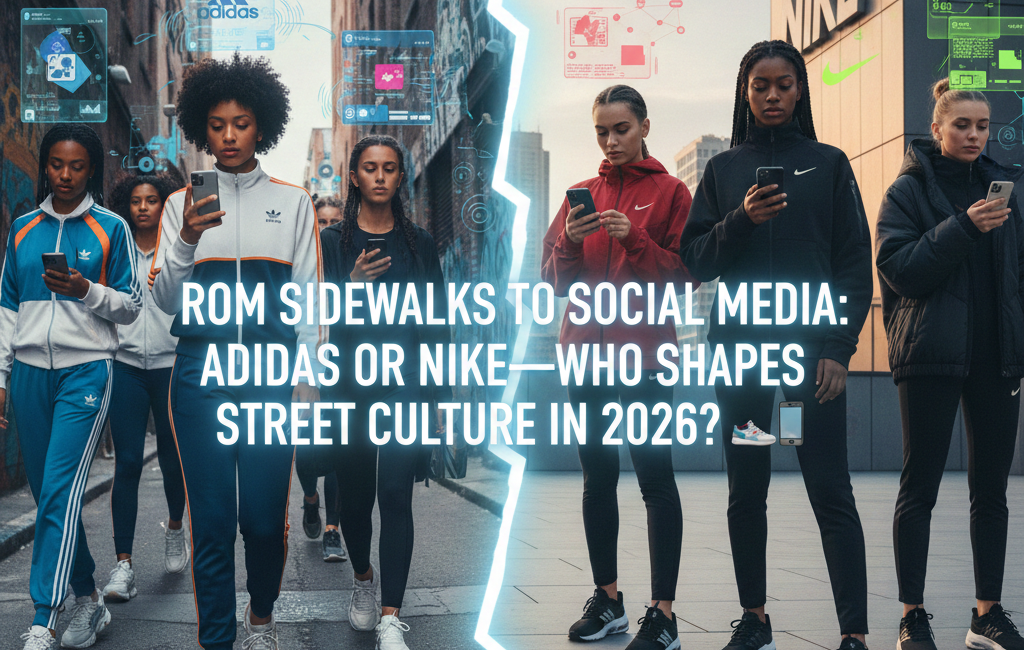
Street culture has always belonged to the people. It’s born on cracked sidewalks, basketball courts with bent rims, subway platforms, and schoolyards. It doesn’t ask for permission. It moves fast, talks loud, and changes before brands even realize what’s happening.
Yet somehow, two global giants—Nike and Adidas—have managed to stay at the center of it all.
In 2026, street culture doesn’t live only on the streets anymore. It lives on Instagram reels, TikTok edits, Discord servers, sneaker resale apps, and outfit check videos shot on shaky iPhones. The question isn’t whether Nike and Adidas are part of street culture. That ship sailed decades ago.
The real question is sharper:
Who actually shapes street culture today—and who’s just reacting to it?
Let’s break it down. No brand worship. No nostalgia goggles. Just facts, vibes, and cultural receipts.
What “Street Culture” Even Means in 2026 🏙️
Before picking sides, we need to be clear about the battlefield.
Street culture in 2026 is a mix of:
- Sneaker culture 👟
- Music (hip-hop, drill, Afrobeats, alt-pop) 🎧
- Fashion (baggy returns, minimalism, Y2K chaos) 👖
- Sports influence (basketball, football, skate) 🏀⚽
- Digital identity (how you look online matters as much as IRL) 📲
It’s not owned by New York or LA anymore. London, Seoul, Lagos, Karachi, Paris, and São Paulo all feed the culture now.
And brands don’t create street culture anymore.
They co-sign it—or get ignored.
That’s the game Nike and Adidas are playing in 2026.
Nike: The Cultural Juggernaut That Moves the Needle 🔥
Nike doesn’t chase culture.
Nike builds gravity.
A Legacy That Still Hits Hard
Nike’s roots in street culture aren’t accidental. Basketball, hip-hop, and rebellion are baked into its DNA.
- Air Jordans didn’t just change sneakers—they changed status 💸
- Nike SB made skate culture mainstream without killing it 🛹
- “Just Do It” became a mindset, not a slogan
Even in 2026, that legacy still carries weight. When Nike drops something, people pay attention—whether they like it or not.
Athlete Culture = Street Culture
Nike understands one truth better than anyone:
Athletes are street icons.
LeBron, Ja Morant, Kylian Mbappé, Serena Williams—these aren’t just sports figures. They’re style references, role models, and cultural signals.
Nike doesn’t just sponsor athletes.
It turns them into brands within the brand.
That’s power.
Nike on Social Media: Loud, Bold, Everywhere 📱
Nike’s digital presence in 2026 is aggressive and intentional:
- Fast edits
- Emotional storytelling
- High-contrast visuals
- Political and social positioning
Nike doesn’t try to be neutral. It takes risks—and risk keeps you relevant.
Even when people criticize Nike, they’re still talking about Nike.
That’s cultural dominance.
Adidas: The Quiet Architect of Street Style 🎧
Adidas doesn’t shout.
Adidas slides into culture.
Style Over Noise
Where Nike is loud and cinematic, Adidas is understated and stylish.
Think:
- Sambas everywhere 👟
- Gazelles back from the dead
- Three stripes paired with tailored fits
Adidas thrives in everyday wearability. It doesn’t need hype drops every week. Its shoes blend naturally into real outfits.
That matters in 2026, when people want authentic fits, not costumes.
Music and Fashion First
Adidas has always leaned into music and lifestyle more than pure athletic dominance.
Historically:
- Run-DMC made Adidas cultural before influencer marketing existed 🎤
- Kanye (before the fallout) reshaped sneaker culture forever
- European street style kept Adidas relevant even when Nike dominated the U.S.
In 2026, Adidas aligns closely with:
- Fashion weeks
- Indie artists
- Underground creatives
- Gender-fluid and minimalist aesthetics
It’s less about flexing. More about belonging.
Sneakers as Cultural Currency 💰
Let’s be honest: street culture still runs on sneakers.
Nike’s Sneaker Game in 2026
Nike owns:
- Air Jordan line 👑
- Air Force 1 (immortal)
- Dunk hype cycles
- Performance-meets-style hybrids
Nike sneakers still drive:
- Resale culture
- Sneaker TikTok
- Hype countdowns
But there’s a downside.
Some people are tired of:
- Artificial scarcity
- Reseller bots
- Endless colorway drops
Nike dominates—but sometimes feels corporate.
Adidas Sneakers: Slow Burn, Long Life
Adidas plays the long game.
- Sambas don’t need hype—they just work
- Gazelles fit everyone
- Campus shoes age well
Adidas sneakers feel less forced, more organic. You see them on real people, not just influencers chasing clout.
In 2026, that authenticity hits different.
Fashion Cycles: Baggy, Minimal, Retro 🧢
Street fashion has shifted again.
Skinny jeans are dead.
Over-designed sneakers are cooling off.
Comfort and silhouette matter more than logos.
Nike’s Fashion Direction
Nike leans into:
- Techwear
- Athletic silhouettes
- Statement pieces
It works best when styled intentionally. When done wrong, it can look try-hard.
Nike is fashion-forward—but not always street-easy.
Adidas’ Fashion Advantage
Adidas wins here.
Its pieces:
- Layer well
- Mix with vintage
- Work across genders
- Feel effortless
In 2026, effortlessness is currency.
Social Media Influence: Who Wins the Algorithm? 📲
Street culture now lives online first.
Nike on TikTok & Instagram
Nike content is:
- Polished
- Emotional
- Big-budget
Great for storytelling.
Sometimes less relatable.
Adidas on Social Platforms
Adidas content feels:
- Casual
- Creator-led
- Less scripted
It blends into feeds instead of screaming for attention.
Different strategies. Different wins.
Global Street Culture: Not Just the West 🌍
This matters more than ever.
Nike’s Global Power
Nike dominates:
- U.S. basketball culture
- Global football markets
- Olympic-level visibility
It’s everywhere.
Adidas’ Cultural Flexibility
Adidas adapts better locally:
- European streetwear
- Asian fashion scenes
- African youth culture
Adidas feels less “American.”
That helps in a globalized street culture.
Authenticity vs Influence 🤔
Here’s the uncomfortable truth:
- Nike shapes culture by force of influence
- Adidas shapes culture by blending into it
Nike leads.
Adidas listens.
Both approaches work—but they hit different audiences.
So… Who Actually Shapes Street Culture in 2026? 🏆
The real answer?
It depends on what you mean by “shape.”
- If shaping means driving conversations, setting trends, and commanding attention → Nike wins 🥇
- If shaping means defining everyday style, influencing how real people dress, and aging gracefully → Adidas wins 🥈
Nike is the headline.
Adidas is the lifestyle.
Street culture needs both.
