

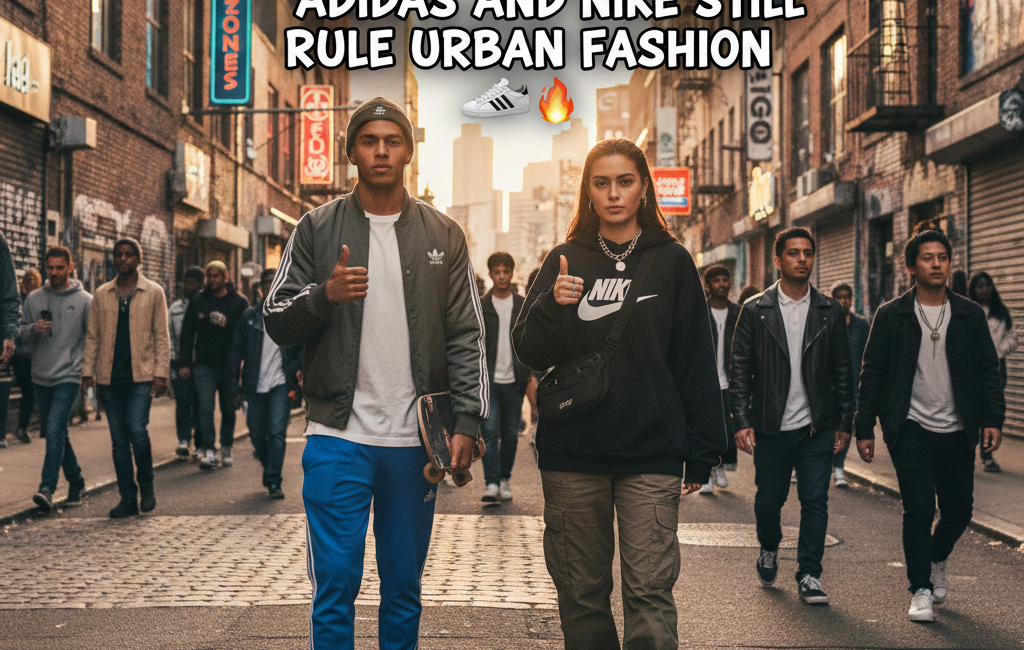
Urban fashion didn’t just appear out of nowhere. It was built block by block—on basketball courts, skate parks, hip-hop stages, school hallways, and city sidewalks. At the center of this evolution stand two giants: Adidas and Nike. Decades have passed, trends have come and gone, but these two brands are still running the streets.
This isn’t luck. It’s culture, timing, and an almost unfair understanding of how people dress, move, and express themselves. Let’s break down how street style evolved and why Adidas and Nike still dominate urban fashion today.
1. What Street Style Really Means 🏙️
Street style isn’t about runway approval. It never was.
It’s about:
- Self-expression
- Comfort that still looks sharp
- Mixing rebellion with practicality
- Turning everyday outfits into statements
Street fashion grows from real people living real lives. If it doesn’t work on the street, it doesn’t last.
Adidas and Nike understood this early. They didn’t chase luxury first. They chased movement, identity, and performance—then let style follow naturally.
2. The Roots: Sports Built the Foundation 🏀⚽
Before streetwear was a category, sportswear was already everywhere.
Adidas: From Fields to the Block
Adidas started with athletes. Football (soccer) boots, tracksuits, and training gear became everyday wear—especially in Europe.
- Tracksuits turned into street uniforms
- Sneakers became daily essentials
- Logos became symbols of pride
In the UK and Europe, Adidas was tied to terrace culture, football fans, and underground scenes. Wearing Adidas wasn’t just fashion—it was belonging.
Nike: Performance Meets Attitude
Nike came in with a different energy. Louder. Bolder. Faster.
Basketball changed everything.
- The Air Jordan line blurred sports and lifestyle
- Sneakers became collectibles
- Athletes became style icons
Nike didn’t just sell shoes. It sold confidence.
3. Hip-Hop Changed the Game 🎤🔥
If sports laid the foundation, hip-hop built the house.
Adidas and Hip-Hop: The Original Love Story
Run-DMC made Adidas immortal.
- Shell-toe Superstars
- No laces
- Tracksuits on stage
They didn’t wear Adidas because they were paid at first. They wore it because it was already part of the culture. That authenticity still matters today.
Nike’s Slow Burn Into Music Culture
Nike wasn’t always embraced by hip-hop at first. But once it landed, it dominated.
- Air Force 1s became a street staple
- Rappers turned sneakers into status symbols
- Lyrics made shoes legendary
Both brands learned the same lesson: culture comes before campaigns.
4. Sneakers Became the Centerpiece 👟✨
Street style revolves around footwear. Always has.
Why?
- Sneakers are functional
- They last
- They’re visible
- They carry stories
Adidas Classics That Never Died
- Superstar
- Stan Smith
- Gazelle
- Samba
These shoes survived decades because they’re simple, clean, and versatile. You can wear them with jeans, cargos, dresses, or suits—and they still make sense.
Nike Icons That Refuse to Fade
- Air Force 1
- Air Jordan 1
- Air Max series
- Dunk
Nike mastered reinvention. Same silhouette, new colors, new stories, new hype—without losing the original soul.
5. Street Style Is About Identity 🧠🧢
People don’t wear Adidas or Nike by accident.
You’re choosing:
- A vibe
- A history
- A message
Adidas Energy
- Clean
- Retro
- European cool
- Understated confidence
Adidas often feels calm but powerful. Less noise, more presence.
Nike Energy
- Bold
- Competitive
- American sports DNA
- Loud confidence
Nike feels like motion. Even standing still, it looks fast.
Different personalities. Same dominance.
6. Collaborations Kept Them Relevant 🤝🔥
Street fashion moves fast. Brands that don’t adapt disappear.
Adidas and Nike didn’t just adapt—they collaborated smart.
Adidas Collaborations
- Kanye West (Yeezy)
- Pharrell Williams
- Designers and artists across genres
Adidas leaned into creativity and minimalism. Yeezy alone reshaped modern streetwear.
Nike Collaborations
- Travis Scott
- Off-White (Virgil Abloh)
- Supreme
Nike collaborations turn drops into events. Scarcity, storytelling, and hype keep the streets watching.
7. Social Media Changed the Battlefield 📱📸
Street style used to be local. Now it’s global.
Instagram, TikTok, and YouTube turned everyday outfits into inspiration boards.
Why Adidas and Nike win here:
- Instantly recognizable logos
- Strong sneaker visuals
- Endless outfit combinations
A clean pair of Sambas or Air Force 1s works in New York, London, Karachi, Tokyo—everywhere.
That universality is power.
8. Comfort Is Non-Negotiable 😌
Modern streetwear isn’t about suffering for style.
People want:
- Breathable fabrics
- Cushioned soles
- Flexible fits
Both brands come from performance backgrounds, so comfort is built in—not added later.
You can walk all day, travel, work, and still look sharp. That’s why people keep buying.
9. Trends Come and Go—Icons Stay ⏳
Oversized fits. Slim fits. Y2K. Minimalism. Techwear.
Trends rotate. Adidas and Nike remain.
Why?
- They don’t abandon classics
- They refresh without disrespecting history
- They let consumers lead the style
Street fashion hates try-hard brands. These two feel natural because they grew up with the streets.
10. Why New Brands Still Can’t Replace Them 🧱
Every year, new streetwear brands pop up.
Some are creative. Some are hype-driven. Few last.
What Adidas and Nike have that others don’t:
- Decades of cultural credibility
- Multi-generational appeal
- Global reach
- Proven quality
You can wear the same brand your parents wore—and still look current. That’s rare.
11. The Future of Urban Fashion 🚀
Street style is evolving again.
- Sustainability matters more
- Gender-neutral fashion is rising
- Comfort-first design is the standard
Adidas and Nike are already moving:
- Recycled materials
- Inclusive sizing
- Tech-driven footwear
They’re not stuck in the past. They respect it while building forward.
Final Takeaway 🎯
Adidas and Nike still rule urban fashion because they never forgot where street style comes from.
They:
- Respect culture
- Invest in identity
- Balance tradition with innovation
- Let the streets decide
Street style isn’t about chasing luxury or trends. It’s about authenticity. And for decades, these two brands have stayed real.
That’s why, no matter what’s trending, Adidas and Nike are still everywhere—on the streets, in the culture, and on people who know exactly who they are. 👟🔥
