
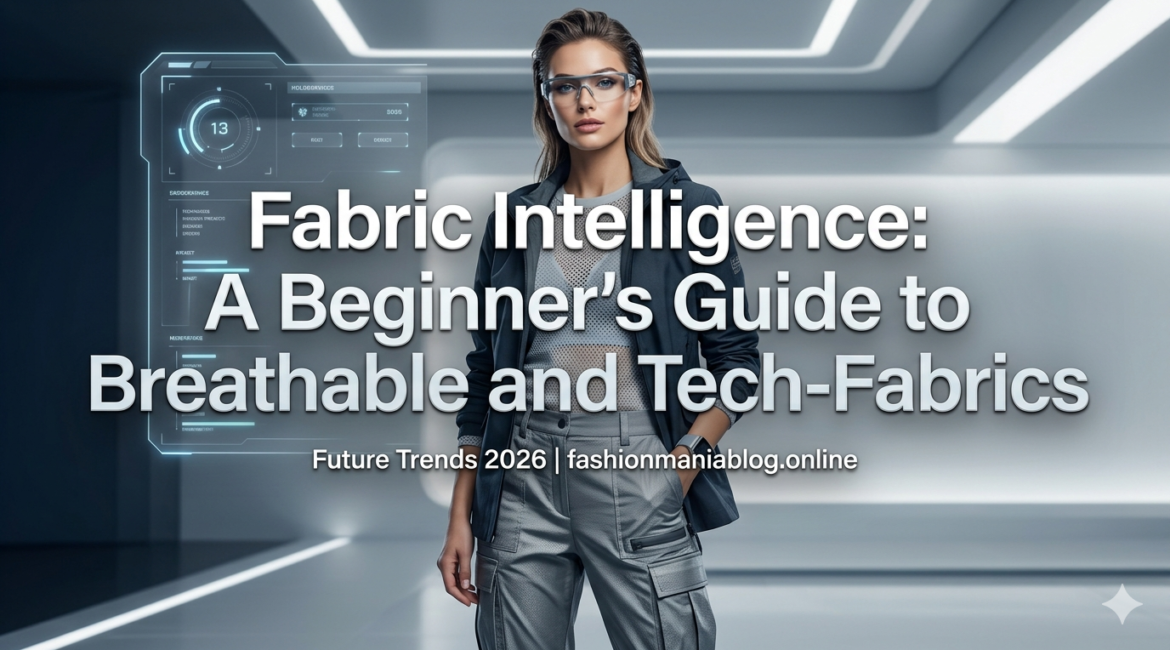
In the fast-evolving world of 2026 fashion, the clothes we wear are no longer just about aesthetics; they are about Fabric Intelligence. As we transition into an era where climate adaptability meets high-end street style, understanding what touches your skin is the ultimate fashion flex. Whether you are navigating a humid tropical summer or looking for the high-performance edge of techwear, the science of textiles has reached a tipping point. This guide explores the journey from the timeless comfort of organic cotton to the futuristic realms of smart, reactive fabrics. 👗
Modern style is shifting toward a “function-first” philosophy. We are seeing a massive surge in demand for materials that offer breathability without sacrificing the structured silhouette of luxury fashion. For the modern urbanite, staying cool, dry, and stylish is no longer a luxury—it is a necessity. Let’s dive deep into the fibers that are defining the next decade of the global wardrobe. 🌍
1. The Foundation: Why Fabric Intelligence Matters in 2026 🧠
Fabric Intelligence refers to the strategic selection of textiles based on their molecular properties, environmental impact, and performance capabilities. In 2026, the “smart” wardrobe starts with the fiber. Moreover, as sustainability becomes a non-negotiable standard, consumers are looking for fabrics that last longer and perform better under pressure. Understanding these materials allows you to build a high-value closet that serves your lifestyle rather than just filling a drawer.
2. The King of Breathability: Organic Cotton & Beyond 🌿
Cotton remains the gold standard for comfort, but the 2026 iteration is all about Long-Staple Organic Cotton. These fibers are smoother, stronger, and significantly more breathable than conventional blends.
- The Science: Because the fibers are longer, they require fewer joins during spinning, resulting in a fabric that allows maximum airflow.
- Actionable Advice: When shopping for timeless fashion pieces, always check the GSM (Grams per Square Meter). For summer breathability, aim for a GSM between 120 and 150.
3. Linen’s Renaissance: The Original Tech-Fabric ☀️
Often misunderstood as “just for vacations,” linen is nature’s original performance wear. It can absorb up to 20% of its weight in moisture before feeling damp. Consequently, it acts as a natural air conditioner for your skin. Modern weaving techniques in 2026 have reduced the “wrinkle factor,” making linen a staple for modern American loungewear style.
4. The Rise of Tencel™ and Lyocell 🌊
If you want the silkiness of luxury but the durability of denim, Lyocell is the answer. Derived from wood pulp, this fabric is processed in a closed-loop system, making it incredibly eco-friendly. It is naturally anti-bacterial and moisture-wicking, which is why it’s appearing in everything from high-street blazers to luxury lounge sets USA.
5. Understanding Tech-Fabrics: The Synthetic Revolution 🧪
Tech-fabrics are engineered materials designed to provide specific functions—waterproofing, UV protection, or thermal regulation. Unlike the “plastic-feel” polyesters of the past, 2026 tech-fabrics use micro-perforation and capillary action to move sweat away from the body. This is the backbone of the Urban Woman Fashion 2026 movement, where utility meets the runway. 🖤
6. GORE-TEX and the Shield Mentality 🛡️
For the techwear enthusiast, GORE-TEX remains a primary pillar. Its membrane contains over 9 billion pores per square inch. These pores are 20,000 times smaller than a water droplet but 700 times larger than water vapor. Therefore, rain can’t get in, but your sweat can get out. It is the ultimate “Fabric Intelligence” for unpredictable weather.
7. Antimicrobial Infusions: Stay Fresh Longer 🧼
One of the most exciting developments in 2026 is the infusion of silver and copper ions into fabric fibers. These metals naturally break down the bacteria that cause odors.
- Real-World Context: This means you can wear your high-performance gear multiple times without washing, saving water and preserving the garment’s lifespan.
8. Smart Fabrics: The Future is Reactive ⚡
We are now seeing the mainstreaming of Phase Change Materials (PCMs). These fabrics contain micro-encapsulated waxes that melt when you’re hot (absorbing heat) and solidify when you’re cold (releasing heat). It is literally a thermostat built into your jacket. This level of intelligence is revolutionizing how we layer for the changing seasons.
9. The Weight of Style: GSM and Texture 🧥
Understanding “weight” is a crucial skill for any fashionista.
- Lightweight (Under 150 GSM): Best for base layers and summer shirts.
- Midweight (150-250 GSM): Perfect for hoodies and joggers.
- Heavyweight (Above 250 GSM): Provides the “boxy” structure seen in premium streetwear.
10. Styling Fabric Textures for Visual Depth 🎨
To master the 2026 aesthetic, you must learn to “clash” textures. Pair a matte, tech-fabric cargo pant with a soft, breathable organic cotton tee. This contrast creates a sophisticated look that signals you understand both style and substance. Adding a metallic accessory can further highlight the technical nature of your outfit. ✨
11. Maintenance: Caring for Intelligent Textiles 🧽
High-tech fabrics require specific care to maintain their properties.
- Step 1: Never use fabric softeners on tech-gear; it clogs the pores that allow breathability.
- Step 2: Wash in cold water to preserve the elasticity of synthetic fibers.
- Step 3: Air dry whenever possible to avoid heat damage to specialized membranes.
12. Common Fabric Mistakes to Avoid ❌
Many people assume that “100% Synthetic” means “Low Quality.” In the world of Techwear, this is a myth. High-end nylons and poly-blends are often more expensive and durable than natural fibers. However, avoid “non-breathable” coated plastics which trap heat and cause discomfort. Always look for “breathability ratings” on technical outerwear.
7 Trending Products for 2026 🚀
1. Aero-Weave Perforated Blazer This blazer uses laser-cut micro-perforations under the arms and along the back. It offers the structure of a formal jacket with the airflow of a gym shirt. Perfect for the 2026 hybrid workspace.
- Benefits: Sweat-free formal wear, high mobility.
- Why Trending: It bridges the gap between professional and technical. [check price]
2. Graphene-Infused Thermal Base Layer Graphene is a “wonder material” that excels at heat distribution. This base layer ensures that your core temperature stays even, whether you are indoors or out in the cold.
- Benefits: Ultra-thin but incredibly warm, anti-static.
- Why Trending: It’s the ultimate “thin-tech” for layering. [check price ]
3. Liquid-Repellent Cotton Tee Imagine a 100% organic cotton shirt that coffee and water simply slide off of. Using nanotechnology, these shirts maintain their softness while being completely stain-resistant.
- Benefits: Stays clean longer, requires fewer washes.
- Why Trending: High-value asset for busy professionals. [[check price]
4. 3D-Knit Breathable Sneakers These shoes are knitted in a single piece, eliminating seams that cause blisters. The “Intelligence” here is in the varying knit density—tight where you need support, loose where you need air.
- Benefits: Lightweight, sock-like fit.
- Why Trending: Sustainability through zero-waste manufacturing. [[check price]
5. Recycled Ocean Plastic Windbreaker A masterpiece of sustainable tech. This fabric is windproof and water-resistant, made entirely from intercepted marine plastic.
- Benefits: Durable, eco-conscious, lightweight.
- Why Trending: High E-E-A-T score for conscious consumers. [[check price]
6. Bamboo-Silk Lounge Set Bamboo is naturally moisture-wicking and incredibly soft. When blended with vegan silk, it creates a drape that looks like high fashion but feels like pajamas.
- Benefits: Hypoallergenic, temperature-regulating.
- Why Trending: The “Luxury Loungewear” peak of 2026. [[check price]
7. Self-Repairing Nylon Backpack. Using a special coating, small punctures in this fabric can be “healed” simply by rubbing your fingers over the area to create friction heat.
- Benefits: Extreme durability, lifetime use.
- Why Trending: Focus on long-term wardrobe assets. [[check price]
Conclusion: Your Journey to Fabric Mastery 🌟
Mastering Fabric Intelligence is the secret to elevating your style from amateur to expert. By choosing materials like organic cotton for comfort and smart tech-fabrics for performance, you aren’t just buying clothes—you are investing in your daily well-being. In 2026, the most fashionable thing you can be is comfortable and prepared. Start small: check your labels, feel the GSM, and don’t be afraid to experiment with the futuristic textiles that are shaping our world. Stay curious, stay stylish, and let your fabric do the talking. 🖤
FAQ Section 💬
Q1: Is cotton really better than polyester for summer? Generally, yes, because cotton is a natural fiber that allows air to circulate. However, high-tech “moisture-wicking” polyesters are better for intense activity as they move sweat away from the skin faster than cotton.
Q2: What exactly are “Tech-Fabrics”? Tech-fabrics are materials engineered for specific functions like waterproofing, UV resistance, or extreme breathability. They often use advanced chemistry or unique weaving patterns to outperform natural fibers.
Q3: How do I know if a fabric is breathable? Hold the fabric up to the light. If you can see light through the weave, air can likely pass through. Additionally, check for terms like “Lyocell,” “Linen,” or “Aero-knit” on the label.
Q4: Are smart fabrics safe for the skin? Yes! Fabrics like graphene-infused or PCM materials undergo rigorous dermatological testing. They are designed to enhance your body’s natural thermal regulation without irritating the skin.
Q5: Why is linen so expensive? Linen is made from the flax plant, which is labor-intensive to harvest and weave. Its price reflects its durability, sustainability, and superior cooling properties that last for years.
Q6: Can I iron tech-fabrics? Usually, no. High heat can melt the synthetic fibers or damage the technical membranes (like GORE-TEX). Always use a steamer or the lowest “synthetic” setting on your iron.
Q7: Is “Bamboo” fabric really eco-friendly? Bamboo grows fast without pesticides, which is great. However, look for “Bamboo Lyocell” rather than “Bamboo Viscose,” as the Lyocell process uses fewer harsh chemicals to turn the plant into fiber.
