
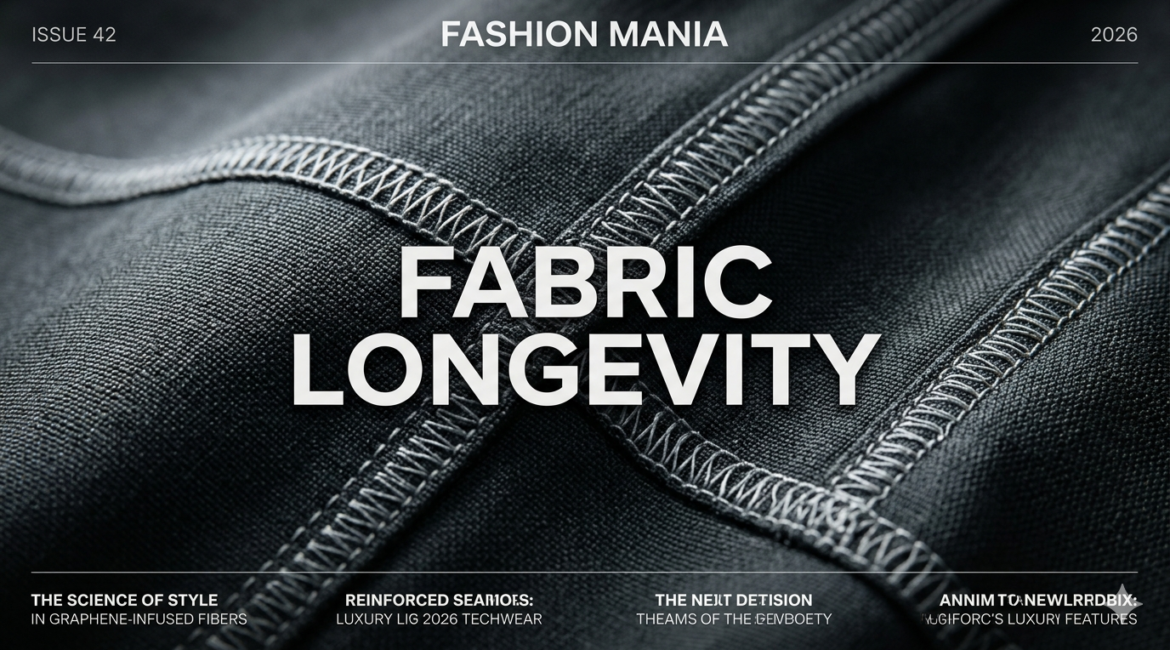
In the fast-paced world of 2026 fashion, where “disposable” clothing often masks its flaws under flashy filters, the true connoisseur knows that luxury isn’t just a label—it’s a construction standard. Whether you are building a capsule wardrobe or investing in high-end urban techwear, the longevity of your garment depends entirely on the invisible architecture of its seams. Buying smart means looking past the silhouette and inspecting the fabric longevity through the lens of technical craftsmanship.
This guide is designed to transform the way you shop. We are moving beyond the surface-level “feel” of the fabric to explore the structural integrity that separates a garment that lasts a decade from one that falls apart after three washes. If you want to master the art of identifying high-quality stitching before you tap your card, you are in the right place. Let’s dive into the editorial standards of garment construction that will elevate your style and your investment strategy. 👗
1. The Anatomy of a Perfect Seam: What to Look For 🧐
When we talk about fabric longevity, the conversation must begin with the seam. A seam is more than just a junction of two pieces of cloth; it is the primary stress point of any garment. To identify high-quality work, you must look for “stitch density.”
In premium tailoring, you should aim for a higher number of Stitches Per Inch (SPI). Mass-produced fast fashion typically uses 6–8 SPI, which leads to gapping. Luxury garments, however, boast 12–15 SPI. This higher density ensures that the seam remains flat and secure, even when the fabric is under tension during movement. Moreover, a high-quality seam will always be straight. Any wobbling or unevenness is a red flag indicating rushed production and a lack of quality control.
2. The Pull Test: Assessing Structural Integrity 🛠️
One of the most actionable pieces of advice for any shopper is the “Pull Test.” Before you buy, gently tug on the fabric on either side of a major seam (like the side of a shirt or the inseam of trousers).
If the threads become visible or the fabric separates even slightly, the fabric longevity of that piece is compromised. In high-quality stitching, the transition between fabric panels should be seamless and firm. You are looking for a “lock” in the thread. If the gap looks like a ladder, it’s a sign that the tension was set incorrectly during manufacturing, leading to eventual fraying or “seam slippage,” where the fabric literally pulls away from the thread.
3. Mastering the Overlock and French Seam 🧵
Turn the garment inside out. This is where the truth resides. While many modern brands use a basic serged edge (the zig-zag looking stitch), high-end luxury pieces often utilize French seams or flat-felled seams.
A French seam encases the raw edge of the fabric completely, making it invisible and protected from friction. This is essential for fabric longevity in delicate materials like silk or fine cotton. Meanwhile, flat-felled seams (commonly seen on high-quality denim and workwear) provide double reinforcement. If the inside of your garment looks as clean and finished as the outside, you are holding a piece of artisanal quality that will withstand years of wear.
4. Reinforcement at Stress Points: The Bar Tack ⚓
Ever noticed a small, dense rectangle of thread at the corner of a pocket or the bottom of a fly? That is a bar tack. In the context of high-quality stitching, these are non-negotiable for items meant to last.
Stress points are where garments fail most often. High-performance urban streetwear and luxury loungewear in 2026 prioritize these reinforcements. Without bar tacks, the repetitive motion of putting your hands in your pockets or sitting down will eventually cause the fabric to tear. Check the belt loops, pocket corners, and buttonholes; if they aren’t reinforced with dense, tight stitching, the garment isn’t built for the long haul.
5. Identifying Pattern Alignment and Grain Lines 📐
A hidden secret of fabric longevity is how the fabric is cut in relation to the stitch. In high-quality garments, patterns (like stripes or checks) will match perfectly at the seams. While this is aesthetically pleasing, it also indicates that the manufacturer took the time to cut the fabric on the correct “grain.”
If a garment is cut “off-grain” to save money on fabric wastage, the stitches will eventually pull the fabric into a twist. Have you ever had a t-shirt where the side seams start migrating toward your belly button after a wash? That is poor construction. High-quality stitching respects the grain line, ensuring the garment hangs straight and maintains its shape for years.
6. The Buttonhole Standard: Luxury in the Details 💎
Buttonholes are often the most overlooked aspect of high-quality stitching. A cheap buttonhole is loosely stitched with thread ends sticking out, which will eventually catch on the button and unravel.
A luxury-grade buttonhole is densely “purled”—meaning the edge is thick, raised, and incredibly tight. Additionally, look for a “keyhole” shape on coats and blazers; this provides extra space for the button shank to sit without distorting the fabric. This level of detail is a hallmark of and indicates that the rest of the garment’s hidden construction is likely of an equally high standard.
7. Thread Quality: The Silent Protector 🧶
Even the best stitch pattern fails if the thread is poor. In 2026, we see a rise in core-spun threads—a polyester core wrapped in cotton. This provides the aesthetic of natural fiber with the immense strength of synthetic materials.
When inspecting for fabric longevity, look at the thread’s sheen and thickness. If the thread looks fuzzy or “hairy,” it is likely a cheap staple fiber that will snap under pressure. High-quality thread should be smooth and slightly lustrous. It should feel like a structural component of the garment, not an afterthought.
8. Hemming Techniques: Blind vs. Visible 👗
The way a garment is hemmed tells you everything about its intended lifespan. Fast fashion uses a simple “top-stitch” hem because it’s fast. However, luxury trousers and skirts often feature a “blind hem,” where the stitching is nearly invisible on the outside.
This isn’t just about beauty; a blind hem allows for more “give” as you walk, preventing the hem from snapping if it catches on a shoe. For those looking for standards, a deep hem (2 inches or more) is also a sign of quality. It provides weight to help the garment drape properly and allows for future alterations.
9. Interfacing and Internal Support 🏗️
While not strictly “stitching,” the way internal supports are stitched to the fabric is vital. High-quality coats use a “floating canvas” rather than a glued (fused) interfacing. You can test this by pinching the fabric near a buttonhole—if you can feel a third layer of fabric moving independently inside, it’s a canvassed construction.
This ensures fabric longevity because glue eventually breaks down, causing “bubbling” on the surface of your clothes. Stitched-in canvas allows the garment to mold to your body over time, becoming more comfortable the more you wear it.
10. Topstitching: Aesthetic vs. Functional 🧵✨
Topstitching is the decorative stitching visible on the outside of the garment. While it looks stylish, in high-quality stitching, it also serves to keep seam allowances flat and prevent them from irritating your skin.
Check the consistency. Is the distance from the edge exactly the same all the way around the collar? Are the corners sharp and clean? If the topstitching is messy, the internal construction is almost certainly worse. Excellence in topstitching is a clear indicator of a manufacturer that values and durability.
11. Luxury Techwear: The Future of Seam Bonding 🦾
As we look toward , we must discuss “ultrasonic welding” and bonded seams. In high-performance techwear, traditional needles can create holes that weaken technical fabrics.
Bonded seams use heat and pressure to fuse fabric together, often reinforced with “seam tape” on the inside. When identifying quality here, look for the smoothness of the tape. If the tape is peeling at the edges or looks wrinkled, the bond is weak, and the fabric longevity will be short-lived.
12. How to Maintain Your High-Quality Garments 🧼
Buying quality is only half the battle. To ensure fabric longevity, you must respect the stitches you’ve invested in.
- Wash inside out: Protects topstitching from friction.
- Use laundry bags: Prevents zippers from catching on delicate seams.
- Avoid the dryer: Heat is the enemy of thread tension.
- Professional pressing: Keeps seams flat and sharp.
🚀 7 Trending Products for Fabric Longevity (2026 Edition)
- The ‘Titan’ Tech-Trench by Aeon This trench coat features double-reinforced ultrasonic seams and a 16 SPI density. It is the gold standard for fabric longevity in 2026. The stitching is reinforced with carbon-fiber thread at the shoulders to prevent sagging. []
- Merino Silk ‘Second Skin’ Set Using French seams throughout, this luxury lounge set feels like air but is built like armor. The high-quality stitching ensures that the delicate knit won’t run or pucker even after repeated wear. []
- Architectural Denim ‘Void’ Jeans These jeans utilize a triple-needle flat-felled seam on the inseam and outseam. The high-quality stitching is done in a contrasting heavy-gauge copper thread, ensuring the denim lasts a lifetime. []
- The Modular ‘Nexus’ Bomber Jacket A masterpiece of urban streetwear. It features “articulated” stitching at the elbows, allowing for maximum movement without straining the seams. It’s the perfect blend of tech and traditional craft. []
- Pure-Grain Leather ‘Matrix’ Boots The Goodyear welt construction is the ultimate form of high-quality stitching for footwear. These boots can be resoled indefinitely because the upper is stitched to a welt, not glued to the sole. []
- The ‘Infinity’ Poplin Button-Down Featuring hand-rolled hems and 18 SPI, this shirt defines the “Quiet Luxury” aesthetic of 2026. The buttonholes are hand-purled, showing a level of detail usually reserved for Savile Row. []
- Graphene-Infused Active Leggings The flat-lock stitching on these leggings is designed to be zero-chafing. The thread is infused with graphene for incredible tensile strength, ensuring the seams never “pop” during high-intensity training. []
Conclusion: The New Era of Conscious Consumption 🌟
Identifying high-quality stitching is more than a shopping skill—it is a commitment to sustainability and personal style. By choosing garments built with superior fabric longevity, you are rejecting the cycle of fast-fashion waste and investing in pieces that tell a story of craftsmanship.
Next time you are in a fitting room, remember: turn it inside out, do the pull test, and count the stitches. Your wardrobe—and your wallet—will thank you. Stay stylish, stay informed, and always choose quality over quantity. Happy shopping! 🛍️✨
❓ Frequently Asked Questions (FAQs)
Q: Why does a higher stitch count matter for fabric longevity? A: A higher stitch count (SPI) creates a stronger, more flexible bond between fabric panels. It prevents “gapping” and ensures the seam can handle the stress of body movement without the threads snapping.
Q: Are expensive brands always better in terms of stitching? A: Not necessarily. Some luxury brands charge for the logo, not the labor. Always check the internal seams and the “Pull Test” regardless of the price tag to verify the high-quality stitching.
Q: What is the easiest way to spot poor quality quickly? A: Look for loose threads, uneven seam lines, and “puckering” (where the fabric looks bunched up along the stitch). These are immediate signs of poor tension and rushed production.
Q: Can a tailor fix poor quality stitching? A: A tailor can reinforce a weak seam or fix a hem, but they cannot easily fix “off-grain” cutting or fabric that has already started to fray at the edge. It’s better to buy quality from the start.
Q: Does thread color matter for quality? A: While mostly aesthetic, a perfect color match (or a deliberate, high-quality contrast) shows that the manufacturer didn’t cut corners by using a “universal” thread for all their garments.
Q: What is a “French Seam” and why is it premium? A: A French seam is a luxury technique where the raw edges of the fabric are tucked inside a second row of stitching. It’s incredibly durable and prevents fraying, making it the peak of fabric longevity.
Q: How do I know if a button is sewn on well? A: Look for a “thread shank”—a small neck of thread behind the button that lifts it slightly off the fabric. This prevents the button from pulling too hard on the cloth and eventually tearing a hole.
