
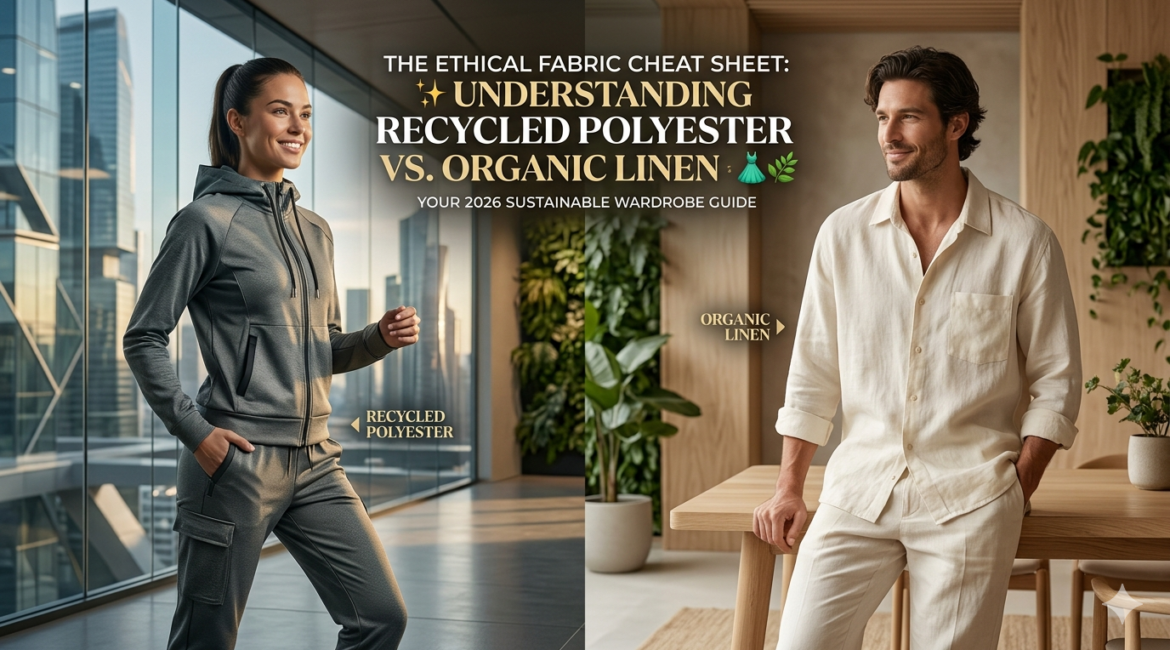
The fashion landscape of 2026 is no longer just about the silhouette; it is defined by the chemical composition and environmental footprint of what we wear. As conscious consumption shifts from a niche trend to a global mandate, the “Ethical Fabric Cheat Sheet” has become the ultimate compass for the modern wardrobe. Today, the debate centers on two heavyweights: Recycled Polyester and Organic Linen. While both claim the sustainability throne, they represent two very different philosophies of future-proofing your style. 🌍👗
Choosing between a high-tech synthetic and a timeless plant-based fiber isn’t just about aesthetics; it’s about understanding the lifecycle of a garment. Whether you are building a high-performance urban techwear kit or a minimalist luxury lounge collection, your choice of fabric dictates how your skin breathes and how the planet heals. Let’s dive deep into the technicalities, the styling potential, and the real-world impact of these 2026 textile titans. 🌿🔥
The Science of Recycled Polyester (rPET) 🧪
Recycled Polyester, often labeled as rPET, is the poster child of the circular economy. By diverting plastic bottles from oceans and landfills, brands transform waste into high-performance fibers. In 2026, the technology has evolved beyond basic recycling; we now see molecular recycling that maintains fiber integrity, ensuring your clothes don’t lose their shape after three washes.
However, it remains a synthetic material. This means while it solves a waste problem, it still introduces the challenge of microplastics. For the urban explorer, rPET offers unmatched durability and water resistance, making it a staple in modern American loungewear style and street-ready techwear. It is the fabric of choice for those who demand resilience and a sleek, futuristic aesthetic. 🖤
The Purity of Organic Linen 🌸
Organic Linen is the antithesis of the synthetic revolution. Derived from the flax plant, it is one of the oldest and most sustainable fibers in human history. In 2026, “Organic” isn’t just a buzzword; it implies a cultivation process free from synthetic pesticides and heavy irrigation. It is carbon-neutral by nature and completely biodegradable.
Linen’s charm lies in its “perfect imperfection.” It breathes better than almost any other fabric, making it the gold standard for luxury lounge sets USA. As we prioritize skin health and thermal regulation, Organic Linen has emerged as a premium asset for those curating a collection of timeless fashion pieces. It doesn’t just look expensive; it feels like a second, cooler skin. 💎
Durability vs. Biodegradability: The Long Game ⏳
When comparing these two, you must ask: How long do I want this item to last, and where does it go afterward? Recycled Polyester is incredibly tough. It resists wrinkles, shrinking, and abrasions. It is designed to endure the rigors of an active lifestyle.
Organic Linen, while strong, has less elasticity. It wrinkles—a trait that 2026 fashionistas embrace as a sign of authenticity. However, when a linen shirt finally reaches the end of its life, it can return to the earth in weeks. A polyester jacket, even a recycled one, will remain for centuries. Therefore, rPET is best for items you intend to wear for a decade, while linen is perfect for seasonal, high-rotation staples. 🍂
Performance in the 2026 Climate 🌡️
Climate volatility has made fabric choice a functional necessity. Recycled Polyester excels in moisture-wicking and heat retention when brushed. It’s your best friend for a rainy commute or a high-intensity day.
Conversely, Organic Linen is the undisputed king of heatwaves. Its molecular structure allows for rapid moisture evaporation and high airflow. In the context of urban woman fashion 2026, we are seeing a “Hybrid Wardrobe” approach: rPET outer shells paired with organic linen base layers to achieve the ultimate temperature-controlled outfit. 🧥✨
7 Trending Sustainable Products for 2026 🚀
1. The “Neo-Flax” Oversized Blazer This piece combines traditional organic linen with a silk-protein finish to reduce wrinkling. It’s a powerhouse for the boardroom and the brunch table.
- Benefits: Hypoallergenic and UV resistant.
- Styling: Pair with rPET bike shorts for a high-low contrast.
- Why Trending: It redefines “Professionalism” in a warmer world. []
2. Circular Techwear Windbreaker Made from 100% ocean-bound plastic, this jacket is fully recyclable at the end of its life through brand-specific take-back programs.
- Benefits: 100% Waterproof and wind-resistant.
- Styling: Layer over a monochrome linen jumpsuit.
- Why Trending: It aligns with the 2026 “Zero-Waste” aesthetic. []
3. The Kinetic Lounge Pant A heavy-weight recycled polyester knit that mimics the feel of cotton but offers 4-way stretch.
- Benefits: Does not pill or lose color over time.
- Styling: Best worn with a tucked-in linen tank top.
- Why Trending: The peak of the “Work-From-Anywhere” uniform. []
4. Heirloom Linen Maxi Dress A hand-dyed, organic linen piece using botanical pigments like indigo and madder root.
- Benefits: Completely compostable and skin-safe.
- Styling: Use a recycled polyester belt to cinch the waist.
- Why Trending: High resale value in the vintage market. []
5. rPET Thermal Base Layer Engineered for the “Urban Nomad,” these thin layers provide immense warmth without the bulk.
- Benefits: Odor-resistant treatment using silver ions.
- Styling: Invisible under linen trousers.
- Why Trending: Essential for unpredictable spring weather. []
6. The Architectural Linen Shirt Featuring structured shoulders and laser-cut hems, this is linen with a modern, sharp edge.
- Benefits: Maximum breathability with a formal silhouette.
- Styling: Wear with dark wash recycled denim.
- Why Trending: Bridges the gap between “Boho” and “Minimalist.” []
7. Recycled Polyester Utility Vest Multiple pockets and modular attachments make this the ultimate functional accessory.
- Benefits: Built to last 20+ years.
- Styling: Wear over a linen hoodie for a texture clash.
- Why Trending: Reflects the “Preparedness” trend of 2026. []
Step-by-Step: How to Audit Your Wardrobe for Sustainability 🛠️
- Check the Composition Label: Look for “GRS Certified” (Global Recycled Standard) for polyester and “GOTS Certified” (Global Organic Textile Standard) for linen.
- The “Wrinkle Test”: Scrunched linen should bounce back with visible, sharp creases. rPET should remain smooth.
- Identify the Use-Case: If the item is for sweat or rain, go Recycled Polyester. If it’s for skin contact and breathability, go Organic Linen.
- Evaluate the End-of-Life: Ask if the brand has a recycling program for their synthetics. If not, favor the natural fiber.
Common Fashion Mistakes to Avoid ❌
- Mixing Microfibers: Washing rPET with natural fibers without a microplastic filter bag. This can damage the linen fibers and release plastic into the water.
- Over-Washing Linen: Linen actually gets softer and stronger with age. Only wash it when necessary to preserve the organic fibers.
- Ignoring the Blend: A 50/50 rPET/Linen blend is often the worst of both worlds—it can’t be easily recycled and it can’t be composted. Aim for 100% purity in either direction.
Conclusion: The Conscious Choice 🥂
The transition to an ethical wardrobe in 2026 isn’t about perfection; it’s about informed intentionality. Recycled Polyester and Organic Linen both have a rightful place in the modern closet, provided they are used correctly. By choosing rPET for durability and Organic Linen for luxury and breathability, you are investing in a future where fashion supports the planet rather than depleting it.
Stay bold, stay informed, and remember that every garment you buy is a vote for the world you want to live in. Whether you choose the high-tech path or the organic one, make sure it’s a choice that reflects your values. ✨
FAQ Section ❓
Q: Does Recycled Polyester feel “scratchy” compared to virgin polyester? A: Not in 2026. Modern texturizing techniques make rPET indistinguishable from virgin fibers, often feeling as soft as silk or as sturdy as canvas depending on the weave.
Q: Can Organic Linen be worn in the winter? A: Absolutely. While known for cooling, linen is a hollow fiber that acts as an insulator when layered properly under heavier recycled polyester or wool coats.
Q: Is rPET truly eco-friendly if it still sheds microplastics? A: It is a “transitional” sustainable fabric. It solves the waste crisis but requires responsible washing (using Guppyfriend bags) to mitigate the microplastic issue.
Q: Why is Organic Linen more expensive than regular linen? A: It accounts for fair wages for farmers, the absence of cheap toxic chemicals, and smaller-scale, high-quality production cycles that prioritize soil health.
Q: How can I tell if a brand is greenwashing? A: Look for third-party certifications like GOTS or GRS. If a brand uses vague terms like “eco-friendly” without data or certifications, proceed with caution.
Q: Does Recycled Polyester fade in the sun? A: No, one of the main advantages of rPET is its incredible colorfastness. It holds dyes much longer than natural fibers, even under intense UV exposure.
Q: Is it okay to iron Organic Linen? A: Yes, but it’s best to iron while the fabric is still damp. However, the 2026 trend heavily favors the “natural drape” and soft wrinkles of unironed linen.
